
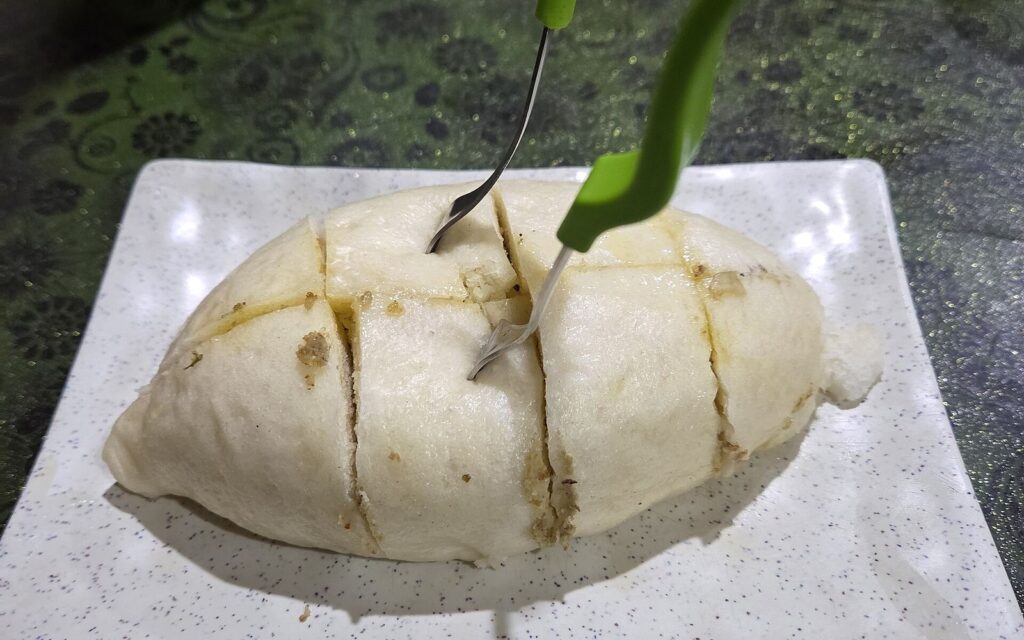
Siddu is simple, but not easy. Most home cooks get a few heavy or broken ones before they get it right. Here are the problems we see most often, and how to fix them.
Problem: dense, heavy Siddu
1. The dough did not rise enough
This is the number one cause. The dough should roughly double and feel airy when you press it. In cold weather, give it longer — up to 2 hours — and keep it somewhere warm, like near the stove or in a switched-off oven with the light on.
2. The yeast was dead
Test it: mix active yeast with lukewarm water and a pinch of sugar. If it is not frothy in 10 minutes, start again with fresh yeast. Water that is too hot (much warmer than your hand) kills yeast.
3. The dough was too stiff
Siddu dough should be softer and slightly stickier than roti dough. Stiff dough cannot rise properly. Add water a spoon at a time while kneading.
4. No second rest
After shaping, let the Siddus rest for 10–15 minutes before steaming. This short second rise makes them noticeably lighter.
Problem: cracked or burst Siddu
5. Overfilling
It is tempting, but too much filling stretches the dough thin and it splits in the steam. About 2 tablespoons per Siddu is plenty.
6. Edges not sealed
Pinch the edges firmly and press out air pockets. Sweet fillings with jaggery leak easily — seal them twice.
7. Dough rolled too thin
Keep the dough thick, about 1 cm. Siddu is a bread, not a momo.
Problem: soggy Siddu
8. Wet filling
Cook the filling until dry, squeeze watery vegetables, and cool it completely before stuffing. A warm or wet filling makes the dough soggy from the inside.
9. Water dripping from the lid
Wrap the steamer lid in a clean cloth to catch condensation, and do not let the water level touch the steamer plate.
Problem: raw or gummy inside
10. Not enough steam
The water must be at a rolling boil before the Siddus go in, and stay there. Steam for 20–25 minutes and avoid opening the lid for the first 15.
11. Crowded steamer
Leave space between Siddus — they expand. Crowded Siddus stick together and cook unevenly.
Problem: flat taste
12. Under-seasoned filling or no ghee
Taste the filling before stuffing; it should be a little saltier than you think, because the dough is plain. And always finish with hot desi ghee — it carries the flavour.
A simple checklist
- Fresh, frothy yeast
- Soft, slightly sticky dough
- Doubled in size before shaping
- Thick, dry, cool, well-seasoned filling
- Firmly sealed edges
- 10–15 minute rest after shaping
- Rolling boil, 20–25 minutes, lid wrapped in cloth
- Hot ghee to finish
Still stuck? Send us a photo of your Siddu on WhatsApp — we are happy to help you figure out what went wrong.
Frequently asked questions
Why is my Siddu hard?
Usually the dough did not rise enough, the yeast was inactive, or the dough was too stiff. Let it double in a warm place and keep the dough soft.
Why did my Siddu break while steaming?
Overfilling, thin dough or poorly sealed edges. Use about 2 tablespoons of filling and pinch the edges firmly.
How long should Siddu be steamed?
About 20–25 minutes at a rolling boil, without opening the lid for the first 15 minutes.


