
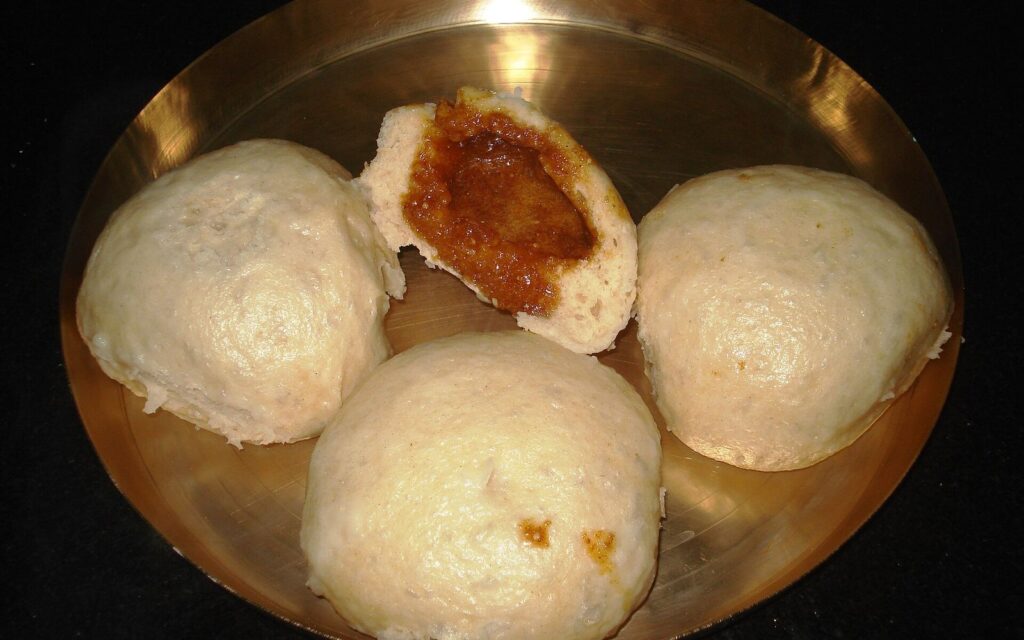
Ask ten Himachali families what goes inside a Siddu and you will get ten answers — and each one will insist theirs is the real one. That variety is part of the joy. Here is a tour of Siddu fillings, from the oldest to the newest.
Walnut and poppy seed (the Shimla hills classic)
In old Mahasu — the upper Shimla area where Siddu most likely began — the favourite filling is walnut and poppy seed (khus-khus). Walnuts from the village trees are crushed coarse with soaked poppy seeds, often with a little onion, green chilli, coriander and salt. The result is nutty, rich and slightly crunchy. This is the filling most people outside Himachal think of as “Siddu”.
Saxena also mentions bangjeeri — a small local oilseed, sometimes described as a Himalayan chia — used in the same way in the old Mahasu area.
Lentil (dal) fillings of Mandi and Kullu
In Mandi and Kullu, lentil fillings are more common: soaked urad (black gram) or other dals, ground with ginger, chilli and spices into a thick paste. A dal Siddu is earthy and filling, and very good with a spoon of ghee and tamarind or mint chutney.
Meat fillings in Mandi
Mandi also has a tradition of meat-filled Siddu, with minced meat cooked dry with spices before stuffing. Today you will see chicken keema versions in cafés too.
Sweet Siddu with jaggery
Sweet Siddus use the same walnut and poppy seed base sweetened with gur (jaggery), sometimes with coconut or sesame. They are made for festivals and special occasions, and eaten with ghee. In some homes, a plain Siddu is also eaten with ghee and gur on the side.
Plain Siddu
Not every Siddu is stuffed. Plain Siddus — just the yeasted dough, steamed — are eaten with dal, ghee or chutney, much like any other bread.
Old fillings that have mostly disappeared
Some older Kullu descriptions mention fillings with potatoes or ground hemp seeds, which were once part of the hill pantry. These are rarely seen today. Poppy seeds are still widely used in kitchens, though families now buy them from shops rather than growing them.
Modern fillings
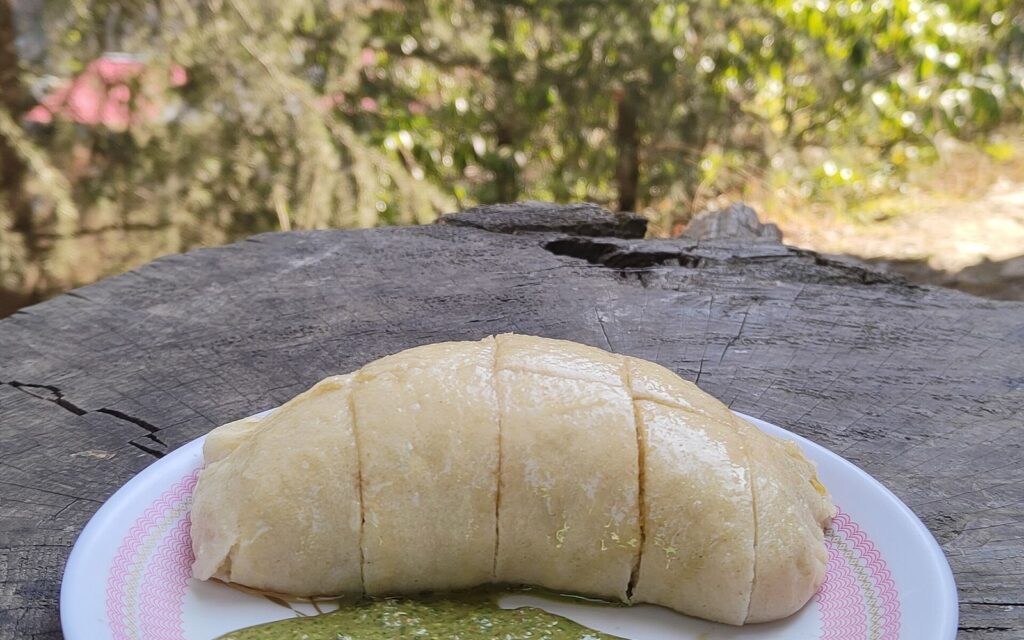
Cafés and stalls across Himachal now play freely with fillings: spicy paneer, potato and coriander, chicken, mushrooms, cheese, peanuts and seeds, even chocolate. Purists grumble, but the dough and steaming stay the same — and a well-made modern Siddu can be delicious.
What we serve in Khopu
At our cart we keep both worlds: the classic akhrot (walnut and poppy seed) and urad dal Siddus, alongside butter, paneer, mushroom, chicken keema and cheese versions. If you want to cook them yourself, each one has a full recipe in our recipe section.
Whatever the filling, keep it thick and dry. A wet filling makes the dough soggy from the inside.
Frequently asked questions
What is the most traditional Siddu filling?
Walnut and poppy seed is the classic filling of the Shimla hills, where Siddu most likely originated. Lentil fillings are traditional in Mandi and Kullu.
Can Siddu be sweet?
Yes. Sweet Siddus are filled with walnuts and poppy seeds sweetened with jaggery and are made for festivals.
Is there non-veg Siddu?
Yes. Mandi has a tradition of minced meat Siddu, and chicken keema Siddu is common in cafés today.


