
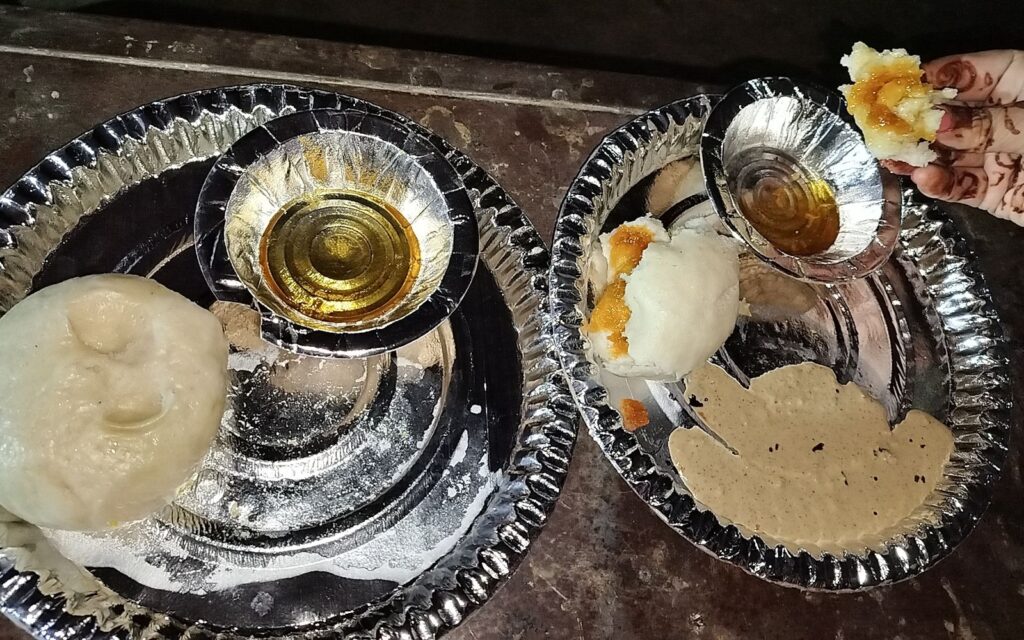
A Siddu on its own is good. A Siddu eaten the pahadi way — hot, cut open and drowning in ghee, with chutney on the side — is something else. Here is how people in the hills actually eat it.
Rule one: eat it hot
Siddu is at its best in the first few minutes out of the steamer, when the dough is soft and the filling is steaming. In homes, Siddus come to the table straight from the pot, in batches, so everyone gets them hot.
Rule two: ghee, and plenty of it
Make two or three cuts on top (or tear it open) and pour over melted desi ghee so it soaks into the dough and filling. Pahadi ghee from hill cows has a deep, nutty flavour that is part of the dish. This is not the moment for restraint — though of course, you can choose how much.
Chutneys
- Green chutney: mint and coriander with green chilli, lemon and salt — fresh and sharp against the rich filling.
- Red chutney: chilli and garlic, for those who like heat.
- Walnut chutney: crushed walnuts with chilli and curd or lemon, a hill speciality in some homes.
- Tamarind chutney: lovely with dal-filled Siddu.
Siddu with dal
Plain Siddus are often eaten like bread with a bowl of dal — urad (maah) or a mixed dal — and ghee. It is a complete, warming meal, and the way many families eat Siddu on a winter evening.
Sweet pairings
Sweet Siddus with jaggery filling are eaten with ghee alone. Some families serve plain Siddu with ghee and a piece of gur (jaggery) on the side — a simple, old-fashioned combination.
Siddu and chai

In tea stalls and roadside dhabas, Siddu and a glass of strong masala chai is the classic mid-morning or evening snack. The sweet, gingery chai is perfect against the savoury, ghee-rich Siddu.
Siddu in a thali
In Kullu you will sometimes see Siddu served as part of a bigger plate — with red rice, rajma, kadhi or other local dishes. It works as both the bread and the star of the meal.
Hands, not cutlery
Siddu is hand food. Tear off a piece with the filling, dip it in chutney, and keep a napkin close — the ghee will find your wrists.
Leftovers
- Store cooled Siddus in a closed box in the fridge for up to two days.
- Reheat by steaming for 5 minutes — the dough comes back soft.
- Or slice and pan-fry in a little ghee until crisp for a very good breakfast.
- Avoid microwaving them dry; the dough turns rubbery.
At our cart in Khopu, every Siddu comes with ghee and green chutney — add a pahadi chai and you have the full experience.
Frequently asked questions
What is Siddu eaten with?
Siddu is eaten hot with melted desi ghee, usually with green chutney, red chilli chutney or dal. Sweet Siddus are eaten with ghee alone.
Can you reheat Siddu?
Yes — steam it for about 5 minutes, or slice and pan-fry in ghee. Avoid microwaving it dry.
Do you eat Siddu with your hands?
Yes, Siddu is traditionally eaten with your hands, torn open and dipped in ghee and chutney.


