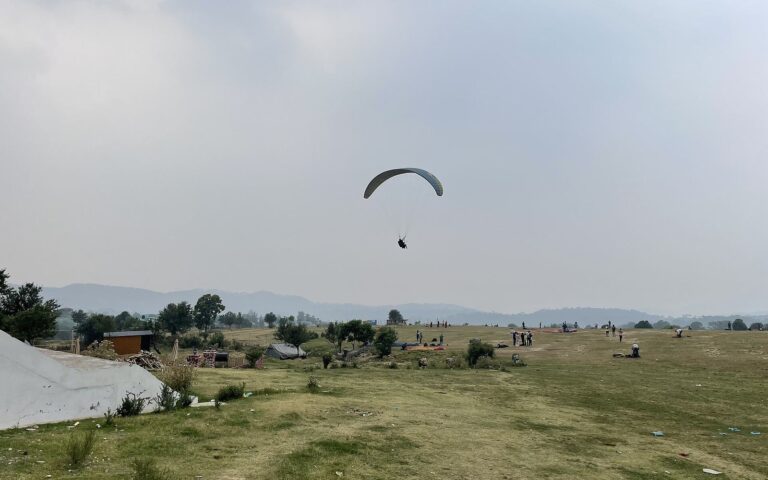
Rajgundha is the trek people do when Bir starts to feel too busy. A small village of wooden houses and wide meadows in the Chhota Bhangal region, it sits at around 2,700 m on the far side of the ridge from Billing, with the Uhl river running below and the Dhauladhar all around. There is little or no phone network, very few people, and a sky full of stars at night.
Route options
On foot from Billing (classic route)
The standard trek starts at the Billing paragliding take-off. The trail climbs through oak and rhododendron forest to a ridge with views back over the Kangra valley, then drops into the Rajgundha valley. Expect 12–14 km and 5–6 hours of walking, with some steep and rocky sections. Most people walk in one day, camp or stay in a homestay, and return the next day.
By road and a short walk (via Barot side)
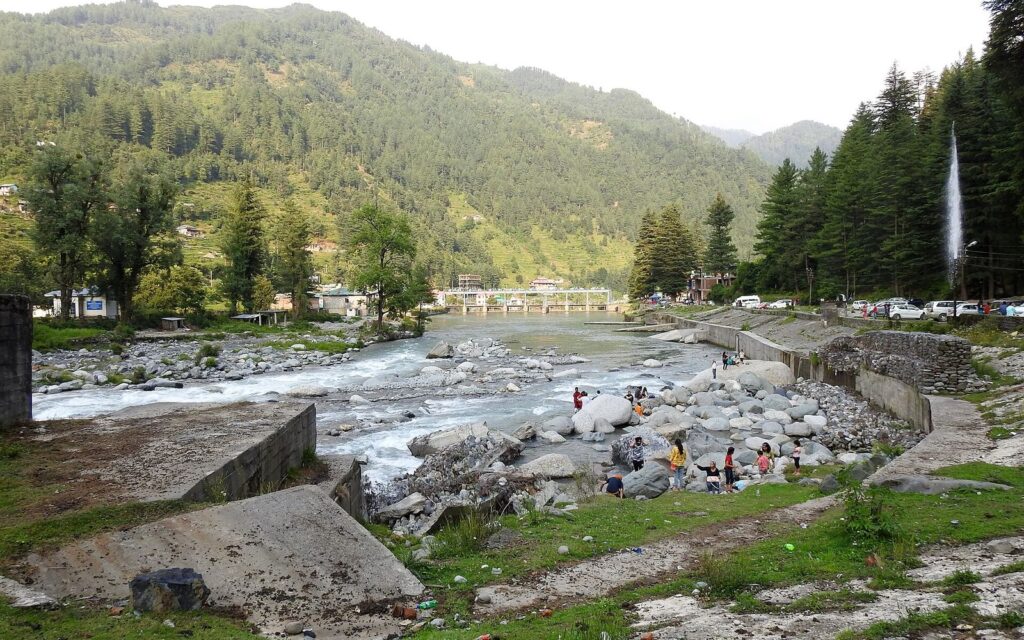
Rajgundha can also be reached from the other side. A rough road goes up the Uhl valley from Barot towards Badagran (Baragram); from there a walk of a few kilometres brings you to Rajgundha. There is also a narrow, partly unpaved road from the Billing side that 4×4 vehicles use in good weather — about 25–30 km and 1½–2 hours from Bir. Check conditions locally before relying on either road.
The full loop
Fit trekkers often walk Billing → Rajgundha → Badagran and then take a vehicle down to Barot, returning to Bir by road via Joginder Nagar. It is a wonderful two-day circuit.
Where to stay
Rajgundha has a few basic homestays, guesthouses and seasonal camps run by villagers and Bir operators. Facilities are simple — expect shared toilets, limited electricity and home-cooked dal, rice and roti. If you carry your own tent, camp only where locals allow it, away from crops and water sources.
Best time to go
- March to June: green, pleasant days and cold nights; rhododendrons in spring.
- September to October: the clearest views of the season.
- July–August (monsoon): best avoided — landslides, leeches and slippery trails.
- Winter: heavy snowfall closes the routes; only for experienced winter trekkers with a guide.
What to pack
- Good trekking shoes with grip, and a light rain jacket in any season
- Warm layers — nights at 2,700 m are cold even in summer
- Water (2 litres), purification tablets and snacks
- Torch or headlamp, power bank and some cash (there are no ATMs)
- Basic first-aid and any personal medicines
- A bag to carry all your rubbish back down
Safety and practical tips
- Mobile coverage is weak or absent in Rajgundha; tell someone in Bir your plan and expected return.
- The trail is not always well marked — first-timers should go with a local guide or a reputable Bir operator.
- Start early from Billing so you reach before afternoon clouds and rain.
- Respect village life: ask before photographing people and homes.
Going further
From Rajgundha, experienced trekkers continue to Plachak, or on longer expeditions towards Thamsar Pass and Bara Bhangal. These need guides, proper gear and planning.
A two-day plan
Day 1: Bir → Billing → Rajgundha
Take an early taxi from Bir to Billing (about 14 km, 40–50 minutes) and start walking by 8 or 9am. Climb steadily through the forest to the ridge, stop for lunch with the view, then descend into the valley. Aim to reach Rajgundha by mid-afternoon, settle into your homestay or camp, and walk around the meadows before sunset.
Day 2: Return, or continue to Barot
Either retrace your steps to Billing (the climb back to the ridge is the hardest part of the day), or walk down to Badagran and arrange a vehicle to Barot, then return to Bir by road via Joginder Nagar. Fix transport from Badagran in advance with your homestay or guide.
What Rajgundha is like
Rajgundha is a small, traditional village rather than a resort. Houses are built of wood and stone, families farm small fields and keep animals, and life follows the seasons. Electricity and water supply can be irregular, and there are only a few simple places to stay. That remoteness is exactly what makes it special.
Getting fit for it
- If you can walk for 5–6 hours with a day pack and climb a few hundred metres without stopping too often, you can manage Rajgundha.
- Spend a day in Bir before the trek to get used to the altitude.
- Walk at a steady pace and drink water regularly; the ridge is higher than Billing.
Leave no trace
Rajgundha has no garbage collection. Carry every wrapper and bottle back to Bir, avoid single-use plastic, use the toilets provided rather than the fields, and never leave a fire burning. The valley stays beautiful only if every visitor treats it that way.
After the trek, come down to Khopu for a hot Siddu and pahadi chai — it is exactly what your legs will want.
Frequently asked questions
How long is the Rajgundha trek?
About 12–14 km one way from Billing, usually 5–6 hours of walking. Most people stay one night in Rajgundha and return the next day.
Is the Rajgundha trek difficult?
It is moderate to hard, with steep climbs and descents. Reasonably fit beginners can do it with a guide.
What is the best time for the Rajgundha trek?
March to June and September to October. Avoid the monsoon months of July and August, and winter, when snow closes the routes.
Is there mobile network in Rajgundha?
Coverage is weak or absent for most networks, so plan to be offline.